



TL;DR:
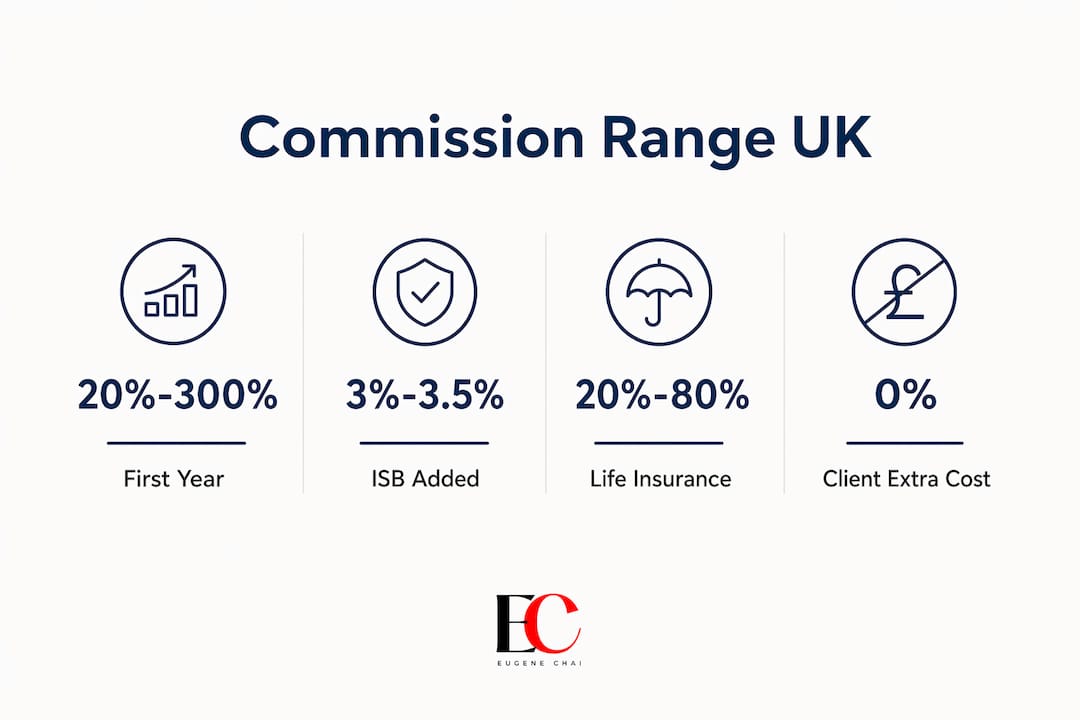
- UK insurance agents earn commissions ranging from 20% to over 300% of the first year’s premium, depending on product type.
- Most commissions are paid upfront and included in the premium, with transparency rules requiring agents to disclose remuneration details.
What do UK insurance agents typically earn in commission?
UK insurance agents earn commission as a percentage of the insurance premium, and the range is wider than most people expect. Commission rates run from 20% to over 300% of the first year’s premium, depending on the product type. Guaranteed acceptance over-50s insurance often has higher commission rates, while simpler products like annuities tend to have lower rates.
Here is a quick breakdown by product type to give you a clearer picture:
- Life insurance: 20%–80% of the first year’s premium, reflecting policy complexity and long-term commitment
- Critical illness and whole-of-life cover: among the highest-commission products, often exceeding 100% of the first year’s premium
- Motor insurance: 7.5%–12.5%, with volume being the primary driver of earnings
- Property insurance: 10%–15%, rising to 20% for large commercial properties
- Liability insurance: 10%–20%, depending on coverage complexity
- Annuities (Legal & General standard rates): 1.0%–1.7%, reflecting the lower advisory intensity of these products
Most commissions on pure protection products are paid upfront as indemnity commissions, meaning the agent receives the bulk of their earnings at policy inception rather than spread across the policy term. This front-loaded structure is standard practice in the UK market. Commission is always embedded in the premium you pay; clients do not receive a separate invoice for it.
Table of Contents
- Why do commission rates vary so much between agents and policies?
- What FCA rules require agents to tell you about their commission
- Insurance Service Brokerage: the additional commission most clients never hear about
- What Singaporean readers should know about UK insurance commissions
- Key takeaways
- FAQ
Why do commission rates vary so much between agents and policies?
The short answer is negotiation. Commission rates are bilaterally negotiated between the insurer and the intermediary, with no single universal rate applying across the market. Several factors shape where a particular agent lands within that range.
- Policy complexity: A whole-of-life policy with underwriting requirements commands a higher rate than a straightforward motor policy.
- Class of business: Commercial lines typically attract different rates from personal lines, reflecting the additional expertise and service involved.
- Volume and quality of business placed: Agents who consistently place large volumes with a given insurer often negotiate more favourable terms.
- Distribution chain: Where a London broker and a regional broker share a placement, they negotiate a split of the total commission agreed with the insurer.
Payment structures also vary. The four main types are:
- Indemnity commission — paid upfront in full, with clawback risk if the policy lapses early
- Non-indemnity commission — earned gradually as premiums are received, eliminating clawback exposure
- Hybrid commission — a blend of upfront and ongoing payments
- Level commission — a flat percentage paid consistently throughout the policy term, often seen in renewal-heavy books of business
Agents generally prefer indemnity structures because they recover their upfront sales and administration costs immediately. The trade-off is clawback: if a client cancels within the clawback period (typically around two years), the agent must return a pro-rata portion of the commission already received.
What FCA rules require agents to tell you about their commission

Transparency is not optional in the UK. Under ICOBS Chapter 4, intermediaries must disclose the nature and scope of their remuneration before or at the point of sale. Commercial clients can go further and request the exact commission amount in writing.
Key points to understand:
- Nature of remuneration must always be disclosed: whether the broker earns commission from the insurer, charges a direct fee, or both.
- Exact amounts on request: commercial policyholders have the right to ask for a precise figure; the broker must provide it.
- Conflict of interest management: brokers carry a fiduciary duty to act in the client’s best interest. Commission from an insurer creates a potential conflict, which must be disclosed and managed.
- No extra charge to the client: commission is embedded in the premium; you do not pay it separately. If a broker charges an explicit advisory fee, this must be agreed in writing.
The FCA’s market study findings reinforce that transparency builds trust. Knowing your broker’s remuneration structure helps you assess whether their recommendation is genuinely in your interest.
Insurance Service Brokerage: the additional commission most clients never hear about
Beyond the headline commission rate, many brokers in the commercial market receive Insurance Service Brokerage (ISB), an additional layer of remuneration paid by the insurer to cover administrative services the broker performs on the insurer’s behalf.
- ISB typically adds 3%–3.5% on top of the standard commission rate.
- Services covered include premium collection, policy document issuance, and general account administration.
- ISB reflects a deliberate cost-shift: insurers transfer administrative tasks to brokers and compensate them accordingly, rather than maintaining those functions in-house.
- Other additional remuneration forms include profit commission (paid when a broker’s book performs well below expected claims) and contingent commission (tied to volume or profitability targets).
ISB is standard practice in commercial insurance and is part of the total remuneration picture that FCA disclosure rules require brokers to communicate.
What Singaporean readers should know about UK insurance commissions
If you are a Singaporean comparing UK insurance structures, or simply building your financial literacy around how agents earn, a few practical points matter.
- Commission is already in the price. Whether you buy a UK life policy directly or through a broker, the premium you pay includes the agent’s commission. There is no separate line item.
- A worked calculation example: Take a monthly premium of £50. After removing Insurance Premium Tax and an admin fee, the net premium might be £44. At a commission rate of 27.5%, the agent earns approximately £12.10 per month on that policy.
- Clawback affects agent stability. If a policy lapses in year one or two, the agent repays a portion of the upfront commission. This is worth knowing if you are considering a career in UK insurance sales.
- FCA transparency rules have no direct Singapore equivalent, but the principle aligns with MAS licensing standards. When dealing with any UK-regulated adviser, you can and should ask for full remuneration disclosure.
For Singaporean readers building broader financial knowledge, understanding insurance commission structures is one part of a wider picture. You can also explore insurance agent commission structures in more depth on Eugenechaitf. For career context, insurance agent salary trends provide a useful benchmark across experience levels.
Pro Tip: If you are ever unsure whether a UK broker’s recommendation is commission-driven, ask them directly for a written breakdown of their remuneration. Under FCA rules, they must provide it for commercial policies, and most reputable brokers will do so for personal policies too.
Key takeaways
UK insurance agent commissions range from 20% to over 300% of the first year’s premium, are embedded in the premium price, and must be disclosed under FCA rules.
| Commission range is wide | Rates run from 20% to over 300% of the first year’s premium, with certain products like guaranteed acceptance over-50s insurance at the upper end of the range.
| Indemnity commissions dominate | Most UK pure protection commissions are paid upfront, with clawback if the policy lapses within roughly two years. |
| ISB adds 3%–3.5% | Insurance Service Brokerage is an additional layer of remuneration covering administrative tasks in commercial markets. |
| FCA disclosure is mandatory | Brokers must disclose remuneration nature upfront; commercial clients can request exact commission amounts in writing. |
| Commission is in the premium | Clients pay no separate commission charge; it is always embedded in the insurance premium. |
FAQ
How much commission does an insurance agent make on a life policy?
Life insurance commissions in the UK generally range from 20% to 80% of the client’s first year’s premium, though some specific product types such as guaranteed acceptance over-50s cover can exceed 100% and even reach much higher levels.
Do clients pay commission on top of their insurance premium?
No. Commission is embedded within the insurance premium itself, so clients pay no additional charge. If a broker charges a separate advisory fee, this must be agreed in writing.
What is clawback in insurance commission?
Clawback is the requirement for an agent to repay a pro-rata portion of their upfront indemnity commission if a policy lapses within the clawback period, typically around two years.
Can you ask your broker how much commission they earn?
Commercial clients have a legal right under FCA rules to request the exact commission amount from their broker. For personal policies, brokers must at minimum disclose the nature of their remuneration.
Is ISB the same as standard commission?
No. Insurance Service Brokerage is an additional payment, typically 3%–3.5%, paid on top of standard commission to compensate brokers for administrative services such as premium collection and document issuance.
Disclaimer: Informational only. Consult an MAS-licensed advisor before investing.






Leave a Reply