



TL;DR:
- An investment-linked policy combines life insurance protection with market-based investments but offers no guaranteed returns. It involves layered fees, market risks, and requires long-term commitment to be cost-effective. Evaluating its suitability against separate insurance and investment options is essential before making a decision.
An investment-linked policy (ILP) is a hybrid financial product that combines life insurance protection with investment in professionally managed sub-funds, where your premiums allocate to units in chosen funds whose value rises and falls with market performance. Unlike a traditional whole life policy, an ILP offers no guaranteed returns. The investment portion is fully exposed to market risk. For young adults and working professionals in Singapore, understanding this dual structure is the first step toward deciding whether an ILP fits your financial plan. This guide covers how ILPs work, what they cost, how they compare with alternatives, and what steps to take before signing anything.
What is a Singapore investment-linked policy and how does it work?
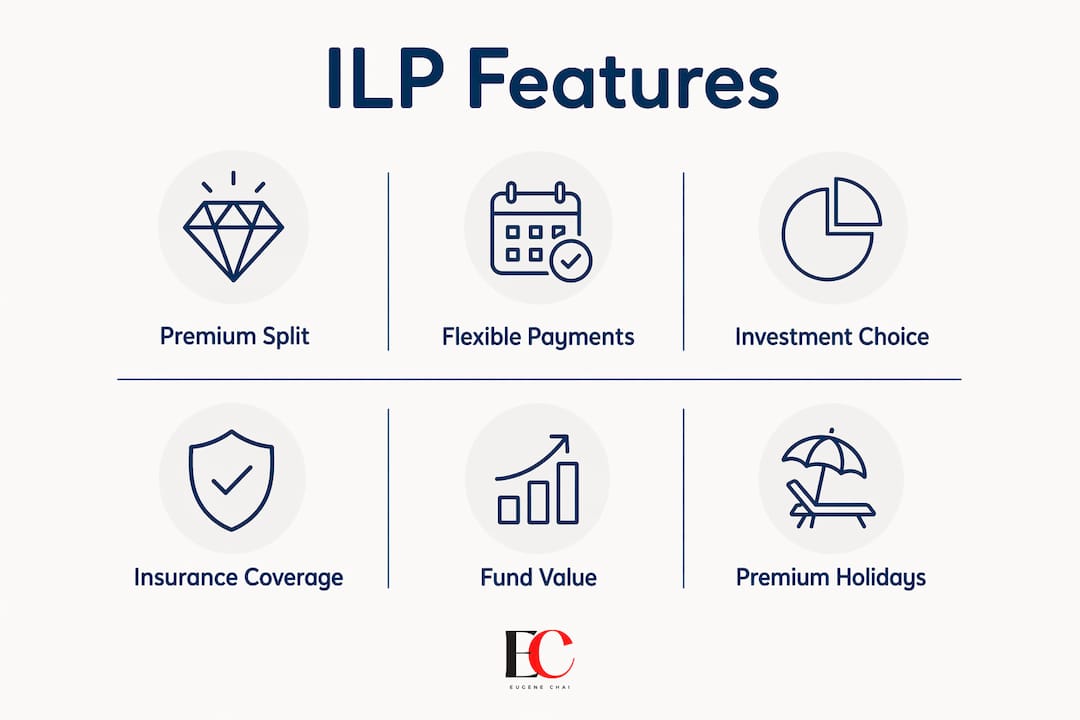
An ILP splits your monthly premium into two parts: one covers your life insurance or critical illness protection, and the other buys units in sub-funds managed by professional fund managers. The sub-funds can range from equity funds to bond funds to balanced funds, depending on your risk appetite. Fees are deducted monthly from your policy value, not separately billed, which makes costs easy to overlook.

The industry term is “investment-linked policy,” often abbreviated as ILP. You will also see it called “investment-linked insurance” in product brochures from insurers like Income Insurance, Prudential Singapore, and AIA Singapore. Both terms refer to the same product structure regulated by the Monetary Authority of Singapore (MAS).
Returns are non-guaranteed and based on projected market scenarios. MAS caps the return projections that insurers can use in marketing illustrations. That cap exists because marketing projections use hypothetical scenarios that may not reflect realistic market conditions. You should always stress-test any ILP illustration against a conservative, lower-than-expected return scenario before committing.
What are the typical features and flexibility of ILPs in Singapore?
ILPs in Singapore come in two main structures: single premium and regular premium. A single premium ILP requires one lump-sum payment upfront, making it more suitable for those with a windfall or a maturing endowment. A regular premium ILP collects monthly contributions, with premiums starting from about S$100 monthly, which makes it accessible for working professionals just starting out.
Modern ILPs have evolved significantly. Key flexibility features include:
- Premium holidays: You can pause premium payments for up to 120 months on some plans without triggering a policy lapse, though insurance charges continue during the pause.
- Life event withdrawals: Some plans allow penalty-free partial withdrawals after the minimum investment period (MIP) for events like marriage, home purchase, or the birth of a child.
- Investment bonuses: Insurers offer bonus units for staying invested, typically after the first few policy years, to reward long-term holders.
- Loyalty bonuses: Additional units credited at set milestones, such as the 10th or 15th policy anniversary, to incentivize continued holding.
- Fund switching: You can reallocate your sub-fund mix without surrendering the policy, giving you some control over your investment direction as market conditions change.
These features make ILPs more flexible than older whole life policies. However, flexibility comes with conditions. A premium holiday pauses your contributions but does not pause the insurance cost charges. Those charges are still deducted from your accumulated fund value. If your fund value drops too low, your coverage can reduce or lapse entirely.
Pro Tip: Before activating a premium holiday, check your current fund value against the projected monthly insurance cost deductions. If the fund cannot sustain at least 12 months of charges, reconsider pausing.
What risks and costs should you understand before choosing an ILP?
The primary risk of an ILP is market volatility. Returns are not guaranteed, and poor fund performance can reduce policy value and erode the insurance coverage you are paying for. This is the most common source of ILP regret among Singaporean policyholders.
The cost structure of an ILP is more layered than most people realize. Here are the main charges to know:
- Fund management fee (expense ratio): Charged annually as a percentage of the sub-fund’s net asset value, typically 1%–2% per year depending on the fund type.
- Administrative charge: A flat monthly fee deducted from your policy value to cover policy administration costs.
- Insurance cost (cost of insurance): Deducted monthly to pay for your life or critical illness coverage. This charge rises as you age, which is a critical detail most buyers miss.
- Bid-offer spread: Some ILPs apply a spread between the buying and selling price of units, effectively a hidden entry cost.
- Surrender charge: Applies if you exit the policy before the MIP ends. This can be a significant percentage of your fund value in the early years.
“Many policyholders unknowingly pay early premiums mostly for fees and commissions rather than investment units, leading to unexpected shortfalls later.” — Seedly
This is the detail that catches most buyers off guard. In the first few years of a regular premium ILP, a large portion of your premium covers initial fees and distributor commissions. Your actual investment units accumulate slowly at first. Combined with rising insurance cost charges as you age, total ILP costs may exceed the combined cost of a separate term insurance plan plus a standalone investment account like a unit trust or robo-advisory portfolio.
Withdrawing during the MIP is another risk. Excessive early withdrawals risk policy lapse because insufficient funds remain to cover ongoing charges. Once a policy lapses, you lose both your coverage and your accumulated investment value.
How do ILPs compare with separate insurance and investment options?
MAS advises consumers to evaluate bundled products against separate alternatives based on fees, control, and financial needs. The comparison below covers the key factors most relevant to young adults in Singapore.
| Factor | ILP | Term insurance + standalone investment |
|---|---|---|
| Cost | Higher overall due to layered fees | Lower; term insurance is cost-effective, investment fees are transparent |
| Flexibility | Premium holidays, fund switching | Full control; can stop, pause, or change investments independently |
| Investment control | Limited to insurer’s sub-fund menu | Full access to ETFs, unit trusts, robo-advisors, Singapore Savings Bonds |
| Insurance coverage | Decreases if fund value drops | Fixed and guaranteed for policy term |
| Simplicity | Single product, one premium | Requires managing two separate products |
| Long-term commitment | Required; early exit is costly | No lock-in on most standalone investments |
The case for an ILP is convenience. You manage one product, one premium, and one relationship with your insurer. For someone who does not want to actively manage a separate investment portfolio, this simplicity has real value. You can read more about saving vs investing in Singapore to understand when bundling makes sense versus keeping products separate.
The case against an ILP is cost and control. A 30-year-old buying a 20-year term plan from an insurer like Aviva or FWD Singapore, then investing the difference in a low-cost ETF through a brokerage like Syfe or StashAway, will typically pay lower total fees and retain full control over their investment allocation.
Pro Tip: Ask your financial advisor to run a side-by-side cost projection comparing the ILP against a term plan plus a unit trust or robo-advisory account over the same period. The numbers will tell you which option delivers more value for your specific situation.
What practical steps should young adults take when considering an ILP?
Before you sign any ILP application, work through these steps in order:
- Assess your protection gaps first. Check whether your current coverage through CPF MediShield Life, employer group insurance, and any existing personal policies already meets your needs. An ILP should fill a genuine gap, not duplicate existing coverage. The 5 types of insurance plans guide on Eugenechaitf is a good starting point for this audit.
- Define your investment goals. Are you saving for a HDB BTO down payment in five years, or building wealth over 20 years? ILPs are designed for long-term goals. Long-term commitment is required for ILPs to deliver their intended benefits; financial advisors caution against using them for short-term objectives.
- Understand the MIP and surrender charges. Read the product summary carefully. Know exactly how many years you must hold the policy before withdrawals become penalty-free. The distinction between MIP and total policy term is critical and often misunderstood.
- Budget your premiums within your overall plan. A useful framework is the 50/30/20 rule: 50% of take-home pay for needs, 30% for wants, and 20% for savings and financial goals. Your ILP premium should sit within the 20% savings allocation, not crowd out your emergency fund or CPF top-ups.
- Consult an MAS-licensed financial advisor. Sales-driven ILP distribution can obscure needs-based suitability. An independent advisor who charges a fee rather than earning a commission will give you a more objective recommendation.
- Review the fund options available. Check the sub-fund menu before committing. If the insurer only offers a narrow range of high-fee actively managed funds, your investment returns will be constrained from the start.
Pro Tip: Request the product’s benefit illustration and ask the advisor to show you the projected policy value at the 5-year, 10-year, and 20-year marks under both the optimistic and pessimistic return scenarios. Compare those figures against what a simple term plan plus index fund would produce.
Key takeaways
An ILP combines insurance and investment in one product, but its value depends entirely on your long-term commitment, cost awareness, and whether the bundled structure genuinely suits your financial goals.
| Point | Details |
|---|---|
| Dual structure | ILPs split premiums between insurance coverage and market-linked sub-funds managed by professionals. |
| Costs are layered | Fund management fees, insurance cost charges, and surrender penalties can exceed the cost of separate term insurance plus standalone investments. |
| Flexibility has limits | Premium holidays pause payments but insurance charges continue, risking policy lapse if fund value drops too low. |
| Long-term commitment required | Early exit triggers surrender charges and can result in financial loss; ILPs are not suited for short-term goals. |
| Compare before committing | MAS advises evaluating ILPs against separate term insurance and investment alternatives based on fees, control, and your actual needs. |
My honest view on ILPs for Singapore young adults
I have seen ILPs recommended to young adults who had no business buying one. A 24-year-old with no dependants, a small emergency fund, and a five-year savings goal for a BTO flat does not need a 20-year investment-linked policy. The product is not bad. The fit is wrong.
ILPs can work well for someone who genuinely wants a single product to handle both protection and long-term wealth building, understands the cost structure going in, and commits to holding the policy for at least 15–20 years. The loyalty bonuses and investment bonuses become meaningful only over that kind of horizon. If you exit early, you absorb the costs without the benefits.
The bigger issue I see is financial literacy. Most buyers do not read the benefit illustration carefully. They do not ask what happens to their coverage if the fund value drops. They do not compare the ILP against a term plan plus a robo-advisory account. If you want to explore investment options for risk-averse Singaporeans, that comparison is worth doing before you commit to any bundled product.
My recommendation: treat an ILP as one option among several, not a default. Get a needs analysis done by an MAS-licensed advisor. Ask hard questions about fees. And never let convenience be the only reason you buy.
— Eugene
Explore more personal finance resources on Eugenechaitf
If this guide has helped you think more clearly about ILPs, there is more practical content waiting for you on Eugenechaitf. Eugene covers budgeting, insurance, and investment strategies for Singaporeans in plain language, with real examples drawn from local financial experience.
Whether you are figuring out how to allocate your first salary, comparing insurance options, or building a long-term savings plan, the guides on Eugenechaitf are written specifically for your situation. Start with the budgeting tips and tricks guide to build the financial foundation that makes any investment decision, including an ILP, a confident one rather than a guessed one.
FAQ
What is an investment-linked policy in Singapore?
An ILP is a financial product that combines life insurance coverage with investment in sub-funds, where premiums are split between protection and market-linked units managed by professional fund managers.
Are ILP returns guaranteed in Singapore?
No. ILP returns are not guaranteed and depend entirely on the performance of the sub-funds you choose. MAS caps the return projections insurers can use in marketing illustrations to prevent overly optimistic forecasts.
What happens if I stop paying my ILP premiums?
If you activate a premium holiday, insurance cost charges continue to be deducted from your fund value. If the fund value falls too low to cover those charges, your policy can lapse and you lose both coverage and accumulated investment value.
How do ILPs compare with term insurance plus a separate investment account?
Term insurance combined with a standalone investment account typically offers lower total fees and greater investment control. ILPs offer convenience through a single product but come with layered costs that can exceed the separate approach over the long term.
When should I consult an MAS-licensed advisor about an ILP?
Before signing any ILP application. An MAS-licensed advisor can run a needs analysis, compare the ILP against alternative products, and show you a side-by-side cost projection so you can make an informed decision based on your actual financial situation.
Disclaimer: Informational only. Consult an MAS-licensed advisor before investing.






Leave a Reply