



TL;DR:
- A debt management plan (DMP) is a structured, multi-year repayment arrangement facilitated by nonprofit agencies to help individuals pay off unsecured debt through negotiated concessions and consolidated monthly payments. It typically lasts three to five years, reducing interest charges and simplifying repayment, but may temporarily impact credit scores and restrict new credit applications. This solution is ideal for those with high debt-to-income ratios seeking a manageable path to becoming debt-free without taking on new loans.
A debt management plan (DMP) is a structured, multi-year repayment program administered by nonprofit credit counseling agencies to help individuals pay down unsecured debts through negotiated concessions and a single consolidated monthly payment. In Singapore, where credit card debt and personal loans are common financial pressures, a DMP offers a realistic path to becoming debt-free without taking on a new loan. Most plans run for 3 to 5 years, making them a medium-term commitment rather than a quick fix. If you are carrying high-interest unsecured debt and struggling to keep up with multiple repayments, understanding how a DMP works could be the most practical step you take this year.
What is a debt management plan and how does it work?
A DMP is a formal arrangement where a nonprofit credit counseling agency acts as the intermediary between you and your creditors. The agency negotiates lower interest rates and waived fees on your behalf, then collects a single monthly payment from you and distributes it to each creditor according to the agreed schedule. This is a service that most individuals cannot replicate on their own, because creditors have established concession programs specifically for accredited counseling agencies.
The process follows a clear sequence:
- Initial counseling session. You meet with a certified credit counselor for a full financial assessment. This session is generally free and covers your income, expenses, and total debt load.
- Debt and creditor review. The counselor identifies which debts qualify. DMPs cover unsecured debts only, such as credit card balances and personal loans. Secured debts like HDB mortgages or car loans are excluded.
- Creditor negotiation. The agency contacts each creditor to negotiate reduced interest rates, waived late fees, and other concessions. These are concessions individuals rarely achieve on their own.
- Plan setup and enrollment. Once creditors agree, you are enrolled in the plan. A setup fee applies, and you begin making one monthly payment to the agency.
- Ongoing disbursement. The agency splits your payment and pays each creditor every month for the duration of the plan, typically three to five years.
Eligibility is not universal. A debt-to-income ratio of 43% or higher is a common threshold that signals a strong fit for a DMP. This means your monthly debt obligations consume nearly half your gross income, a level where standard repayment becomes unsustainable without intervention.
Pro Tip: Before enrolling, gather three months of payslips, your CPF contribution statements, and a complete list of outstanding balances. A thorough financial picture helps the counselor negotiate the strongest possible terms with your creditors.

What are the benefits and limitations of debt management plans?
Understanding the full picture of a DMP helps you decide whether it is the right debt management solution for your situation.
Key benefits:
- Simplified repayment. One monthly payment replaces multiple bills, reducing the mental load of tracking due dates across several creditors.
- Reduced interest costs. Negotiated lower rates mean more of your payment goes toward the principal balance rather than interest charges, accelerating your path to being debt-free.
- Structured timeline. A fixed 3 to 5 year plan gives you a clear end date, which is psychologically powerful when debt feels endless.
- Fee waivers. Late fees and over-limit charges are often waived upon enrollment, reducing your total outstanding balance.
- Long-term credit recovery. Consistent payments improve credit over time, even if the initial enrollment causes a temporary dip.
Limitations to consider:
- Temporary credit score impact. Closing revolving credit accounts during enrollment reduces your available credit, which can lower your credit score in the short term. This is a known trade-off, not a permanent setback.
- No debt forgiveness. A DMP requires full repayment of the principal. It reduces the cost of debt, not the amount owed.
- Administrative fees. Setup fees and monthly administrative charges apply. Returned payment fees typically range from $25 to $35, which adds up if you miss a payment.
- Restrictions on new credit. You cannot open new credit accounts during the plan. This requires genuine lifestyle adjustment for the duration.
- Credit history nuance. Creditor agreements may re-age delinquent accounts to current status, which improves your credit report going forward. However, prior missed payments are not erased from your history.
The net effect for most people is positive over the full plan period. The short-term credit impact is real but manageable, and the long-term outcome of eliminating high-interest debt outweighs the temporary inconvenience.
How does a DMP compare to other debt relief options?
Choosing the right debt relief path depends on your specific financial situation. The table below compares a DMP with three common alternatives.
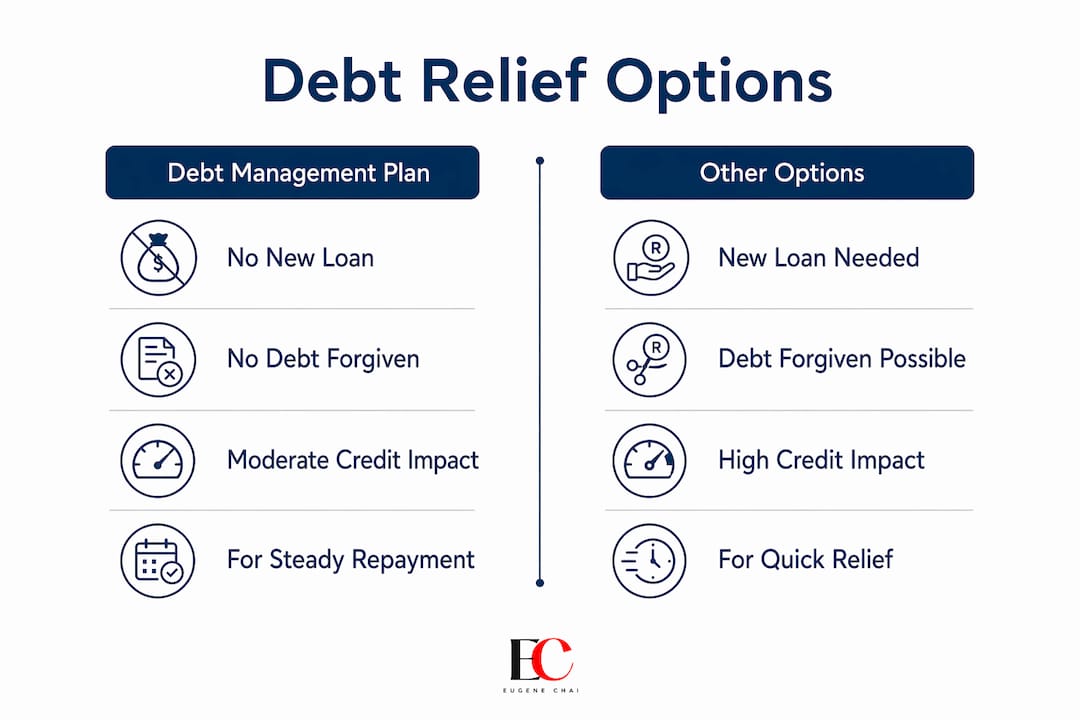
| Option | New loan required? | Debt forgiven? | Credit impact | Best for |
|---|---|---|---|---|
| Debt management plan | No | No | Temporary dip, long-term improvement | Steady income, high-interest unsecured debt |
| Debt consolidation loan | Yes | No | Depends on loan terms | Good credit score, lower DTI ratio |
| Debt settlement | No | Partial | Significant negative impact | Severe hardship, creditor negotiation |
| Bankruptcy | No | Yes (partial) | Severe, long-term | Last resort, unmanageable debt |
A DMP merges debts without creating a new loan, which is its clearest distinction from a debt consolidation loan. With a consolidation loan, you borrow a new sum to pay off existing debts and then repay the loan. This requires a credit check and approval, and the interest rate depends on your creditworthiness. A DMP bypasses this entirely.
Debt settlement involves negotiating with creditors to accept less than the full amount owed. While this sounds appealing, it typically requires you to stop paying creditors for months to build leverage, which causes serious credit damage and potential legal action. A DMP avoids this by maintaining creditor relationships and keeping accounts in good standing.
Pro Tip: If your credit score is still relatively intact, explore whether a balance transfer to a 0% promotional rate card or a debt consolidation loan from POSB, DBS, or OCBC makes financial sense before committing to a DMP. A DMP is most valuable when your credit options are limited or your debt load is too high to manage independently.
What are the steps to enroll and succeed in a debt management plan?
Enrollment is straightforward, but success depends on sustained discipline over several years. Here is how to approach it.
Enrollment steps:
- Find an accredited credit counseling agency. In Singapore, Credit Counselling Singapore (CCS) is the primary nonprofit agency offering DMP services. Verify accreditation before sharing any financial information.
- Complete the financial assessment. Submit proof of income, a list of all debts, and a detailed monthly expense breakdown. This determines your affordable monthly payment amount.
- Review the proposed plan. The counselor presents a repayment schedule based on creditor responses. Review the interest rates, fees, and timeline before signing.
- Enroll and set up payment. Pay the setup fee and schedule your first monthly payment. Align the payment date with your paycheck date to reduce the risk of shortfalls.
Habits that determine success:
- Pay on time, every month. Late or returned payments risk fees and loss of creditor concessions, which can unravel the entire plan.
- Close existing credit accounts as required. Most creditors mandate this upon enrollment, and opening new credit is prohibited for the plan’s duration.
- Build a small emergency fund alongside the plan. Even $500 to $1,000 set aside prevents a single unexpected expense from derailing your monthly payment.
- Track your progress monthly. Watching balances decrease is motivating and helps you catch any disbursement errors early.
A solid monthly budgeting practice is the single most effective tool for staying on track throughout the plan. Without a clear picture of your income and expenses, even a well-structured DMP can fall apart under the pressure of daily spending decisions.
Key takeaways
A debt management plan is the most accessible structured debt relief option for Singaporeans with unsecured debt, a steady income, and limited credit options.
| Point | Details |
|---|---|
| DMP definition | A 3 to 5 year nonprofit-administered repayment program for unsecured debts. |
| How it works | One monthly payment to the agency, which negotiates rates and pays creditors directly. |
| Credit impact | Temporary score dip at enrollment, with long-term improvement through consistent payments. |
| Key restriction | No new credit accounts allowed during the plan; most existing accounts are closed. |
| Best fit | Individuals with a debt-to-income ratio above 43% and steady income who need structured support. |
My honest view on debt management plans
I have spoken with many readers at Eugenechaitf who feel embarrassed about reaching out for debt help. That embarrassment is understandable, but it is also the single biggest obstacle to recovery. A DMP is not a sign of failure. It is a structured, legal, and professionally supported process that thousands of people use to get their finances back on track.
What I find most valuable about a DMP is the psychological shift it creates. When you go from managing five separate creditor calls and due dates to making one predictable payment each month, the stress reduction is immediate. That mental clarity makes it far easier to stick to a budget and rebuild savings simultaneously.
My caution is this: not every agency is equally reputable. Credit Counselling Singapore (CCS) is the accredited body in Singapore, and I would always recommend starting there rather than with any private or commercial debt management company. Be wary of any service that charges high upfront fees or promises to settle your debts for less than you owe. Those are different products with very different risk profiles.
The long-term outlook for someone who completes a DMP is genuinely positive. Debt eliminated, credit recovering, and financial habits rebuilt. That is a strong foundation for whatever comes next, whether it is building your CPF savings, starting an investment portfolio, or simply sleeping better at night.
— Eugene
Take the next step toward financial recovery
If you are considering a debt management plan, the most important parallel move is getting your budget in order. A DMP handles your debt repayment structure, but your day-to-day spending decisions determine whether you can sustain it for three to five years.

At Eugenechaitf, we have put together practical resources specifically for Singaporeans working to regain financial control. Our budgeting tips and tools walk you through exactly how to allocate your income so your DMP payment is always covered. You will also find smart saving strategies to help you build that essential emergency buffer alongside your repayment plan. For deeper financial literacy on debt and credit, the courses at Storehouse Firm are a worthwhile resource to explore.
FAQ
What debts qualify for a debt management plan?
DMPs cover unsecured debts only, including credit card balances and personal loans. Secured debts such as HDB mortgages, car loans, and student loans are not eligible.
Will a DMP hurt my credit score?
Enrollment can cause a temporary credit score dip due to account closures, but consistent on-time payments through the plan typically lead to neutral or improved credit standing over time.
How much does a debt management plan cost?
Initial credit counseling is generally free. Setup fees and monthly administrative charges apply once enrolled, and returned payment fees typically range from $25 to $35.
Can I use a credit card while on a DMP?
No. Opening new credit accounts is prohibited during a DMP, and most existing credit accounts are closed at enrollment. This restriction applies for the full duration of the plan.
How is a DMP different from a debt consolidation loan?
A DMP consolidates your payments without requiring a new loan. A debt consolidation loan requires borrowing a new sum to pay off existing debts, which depends on your credit approval and introduces new loan terms.
Disclaimer: Informational only. Consult an MAS-licensed advisor before making financial decisions.






Leave a Reply