



A monthly budget is defined as a written plan that assigns every pound of your take-home pay to a specific purpose before the month begins. When you create your first monthly budget, you are not restricting yourself. You are giving your money direction. Most first-time budgeters start with one of two frameworks: the 50/30/20 rule, popularised by NerdWallet and Fidelity, or zero-based budgeting, where income minus planned expenses equals zero. Both approaches work. The key is choosing one, starting with real spending data, and refining as you go. Tools like Google Sheets, Money Dashboard, or dedicated apps make the process far more manageable than most people expect.
How to create your first monthly budget: start with take-home pay
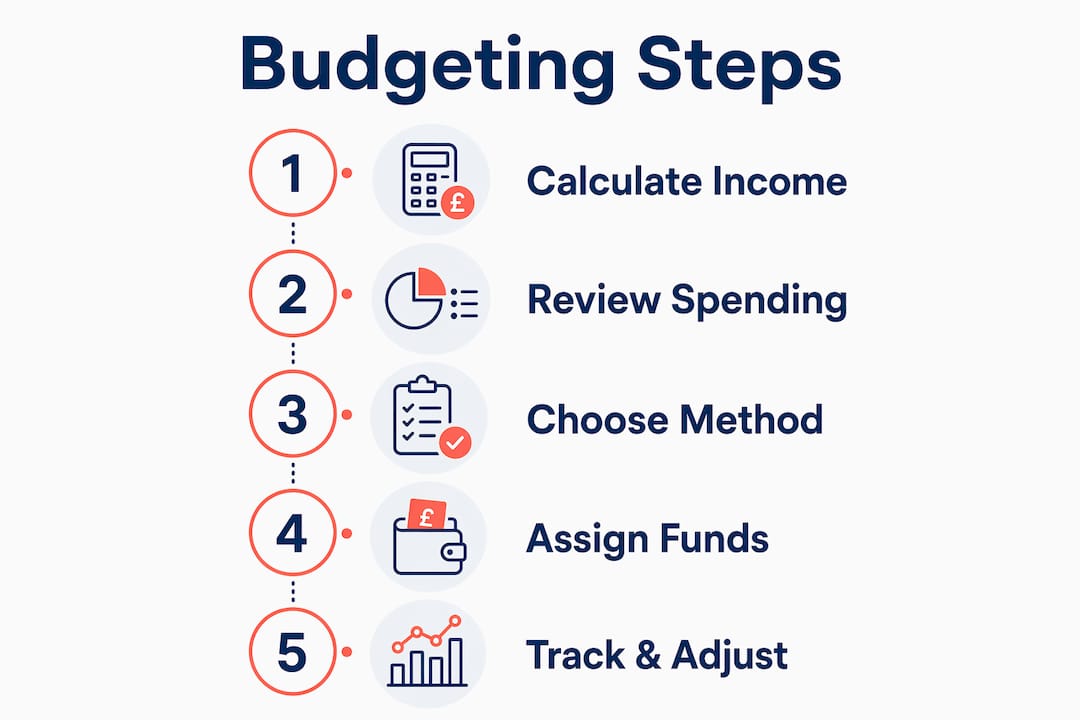
The single most important number in any personal budget is your net income, not your gross salary. Take-home pay is the accurate baseline for budgeting because it reflects what actually arrives in your bank account after CPF contributions, income tax, and other deductions. Budgeting from your gross figure is one of the most common beginner errors, and it leads to overspending from the very first month.
To confirm your monthly take-home pay, check your last two or three payslips or review your bank deposits over the same period. The figure you want is the amount credited to your account, not the number at the top of your payslip.
Variable income earners, including freelancers, part-time workers, and those on commission, face an additional challenge. The safest approach is to use your lowest income month from the past three to six months as your budget baseline. This creates a conservative floor. Any extra income in a higher-earning month becomes a bonus you can direct towards savings or debt.
- Confirm net income from payslips or bank statements, not employment contracts
- Use the lowest recent month as a baseline if your income fluctuates
- Include all income sources: salary, side income, rental income, and regular transfers
Pro Tip: Set up an automatic transfer on payday that moves a fixed amount directly into a separate savings account. This removes the temptation to spend first and save whatever remains.
Why reviewing your past spending is the foundation of good budgeting
Before you allocate a single pound, you need to understand where your money has actually been going. Reviewing three months of bank and credit card statements gives you a realistic picture of your spending patterns, which is far more accurate than guessing.

Most people are surprised by what they find. Subscriptions they forgot about, food delivery costs that add up to hundreds per month, and irregular expenses like annual insurance premiums that do not appear every month but must be planned for. These surprises are exactly why reviewing statements before budgeting matters.
Here is a practical process to categorise your spending:
- Download three months of bank and credit card statements into a spreadsheet or budgeting app.
- Group every transaction into broad categories: essentials (rent, utilities, groceries, transport), wants (dining out, entertainment, subscriptions), and savings or debt repayments.
- Total each category for each month, then calculate the average across all three months.
- Identify irregular or annual expenses such as car insurance, medical check-ups, or holiday costs, and divide the annual total by 12 to get a monthly provision figure.
- Use these averaged figures as your starting category amounts for your first budget.
Setting category amounts based on real spending averages rather than optimistic guesses reduces mid-month surprises significantly. This is the difference between a budget that holds and one that collapses by the second week.
Pro Tip: Track cash spending separately by keeping receipts or noting cash withdrawals in a notes app immediately after spending. Cash is the easiest category to lose track of.
Which budgeting method suits first-time budgeters?
Three methods dominate beginner budgeting advice, and each suits a different personality and lifestyle. Choosing the right one early saves you weeks of frustration.
The 50/30/20 rule
The 50/30/20 framework allocates 50% of after-tax income to needs, 30% to wants, and 20% to savings and debt repayment. It is the most widely recommended starting point for beginners because it requires only three categories. Fidelity’s variation adjusts this slightly to a 60/30/10 split with an additional 15% savings target layered on top, which suits those with higher fixed costs.
Zero-based budgeting
Zero-based budgeting means assigning every pound a job before the month starts, so that income minus all planned expenses and savings equals zero. This does not mean spending your entire account balance down to nothing. It means no pound is left unassigned. Every remaining pound after expenses is deliberately directed to savings, investments, or debt. This method suits detail-oriented people who want full visibility over their money.
The envelope method
The envelope method works best for cash users or those who overspend in specific categories. You withdraw cash for each spending category and place it in a labelled envelope. When the envelope is empty, spending in that category stops for the month. Digital versions of this method exist in apps like Goodbudget.
| Method | Best for | Pros | Cons |
|---|---|---|---|
| 50/30/20 | Beginners wanting simplicity | Easy to start, only 3 categories | Less precise, may not suit high-cost areas |
| Zero-based | Detail-oriented planners | Full control, no unassigned money | Time-intensive to set up each month |
| Envelope | Overspenders in specific areas | Tangible spending limits | Inconvenient for digital payments |
- Start with the 50/30/20 method if you have never budgeted before
- Move to zero-based budgeting once you are comfortable tracking categories
- Use the envelope method as a short-term tool to control a specific problem category
Overbuilding your category list in the first month is one of the most common reasons beginners abandon their budgets. Start with five to eight categories maximum and add detail later.
Pro Tip: Treat your savings allocation as a fixed expense, not an afterthought. Budget for it first, alongside rent and utilities, so it is never the category that gets cut.
How to track, review, and adjust your budget each month
Creating a budget plan is the beginning, not the end. Budgeting is iterative, meaning you track, compare, and adjust every single month. The first month will not be perfect, and that is expected.
The most practical tracking tools for beginners include:
- Spreadsheets: Google Sheets or Microsoft Excel with a simple monthly budget template give you full control and visibility.
- Budgeting apps: Applications like Planner Bee (popular in Singapore), Wallet by BudgetBakers, or YNAB (You Need A Budget) connect to bank accounts and categorise transactions automatically.
- Manual logs: A simple notebook or notes app works for those who prefer a hands-on approach and find apps overwhelming.
At the end of each week, compare your actual spending against your budgeted amounts. If you overspent on groceries but underspent on entertainment, note it. This variance tells you whether your category amounts are realistic or need adjusting.
Automating savings on payday is the single most effective habit you can build into your budget. Set up a standing order or GIRO instruction to transfer your savings amount the moment your salary arrives. This “pay yourself first” principle means savings happen before discretionary spending begins.
For savings goals, Fidelity recommends starting with a starter emergency fund of at least $1,000, then building towards three to six months of essential expenses. This progression gives you a clear, motivating target rather than an abstract instruction to “save more.” Having a defined goal makes it far easier to stay consistent month after month.
A budget feedback loop means you treat every month’s result as data. Overspending in a category does not mean you failed. It means you now have better information to set a more accurate figure next month.
Pro Tip: Schedule a 20-minute budget review on the last Sunday of every month. Review the previous month’s variances, set next month’s category amounts, and confirm your savings transfer is in place.
Key takeaways
A successful first monthly budget is built on take-home pay, real spending data, and a simple method you will actually maintain month after month.
| Point | Details |
|---|---|
| Use take-home pay | Base your budget on net income, not gross salary, for accurate planning. |
| Review three months of spending | Average your actual expenses to set realistic category amounts from the start. |
| Choose a simple method | The 50/30/20 rule is the most beginner-friendly starting framework available. |
| Automate savings first | Set up a standing order on payday so savings happen before discretionary spending. |
| Treat budgeting as iterative | Review variances monthly and adjust category amounts based on real data. |
My honest view on making your first budget stick
I have seen many people approach their first budget with tremendous enthusiasm, only to abandon it by week three. The reason is almost always the same: they built something too complicated to maintain. When I started budgeting seriously, I made exactly this mistake. I had 22 spending categories in my first spreadsheet. By month two, I had stopped filling it in.
The budgets that actually work are the ones that are simple enough to update in ten minutes. Five to eight categories, a clear savings target, and a monthly review habit will outperform any elaborate system you cannot sustain. I have found that the 50/30/20 method is the most forgiving starting point, particularly for young adults whose expenses are still changing. You can refine it into something more precise once you have three months of real data behind you.
One thing I would add that most guides overlook: budget for fun deliberately. If your budget has no allocation for entertainment, dining out, or hobbies, you will break it. Building in a realistic “wants” category is not indulgence. It is what makes the plan sustainable. For Singaporeans specifically, this might mean budgeting for hawker centre meals, weekend activities, or travel savings. Make the budget reflect your actual life, not an idealised version of it.
The goal of your first budget is not perfection. It is awareness. Once you know where your money goes, you can make intentional decisions about where it should go. That shift in mindset is worth more than any specific framework or app.
For more on building saving habits alongside budgeting, the Eugenechaitf blog covers how to balance saving within a budget and growing your money over time.
— Eugene
Take your budgeting further with Eugenechaitf
If you found this guide useful, the Eugenechaitf blog has a full library of personal finance resources built specifically for Singaporeans. From detailed budgeting tips and tools to savings strategies and beginner investment guides, the content is grounded in real experience and tailored to the financial realities of life in Singapore.
Whether you are setting up your first budget, working towards an emergency fund, or starting to think about investing, Eugenechaitf provides the practical, no-nonsense guidance you need. Explore the savings resources to find templates, goal-setting frameworks, and strategies that complement everything covered in this article. The financial habits you build now will compound in your favour for decades to come.
FAQ
What income figure should I use to create my first monthly budget?
Use your after-tax take-home pay, which is the amount deposited into your bank account each month. Budgeting from your gross salary leads to overspending because it includes deductions you never actually receive.
How many spending categories should a beginner budget have?
Start with five to eight broad categories. Overcomplicating your category list is one of the leading reasons beginners abandon their budgets before the month ends.
What is the 50/30/20 rule in budgeting?
The 50/30/20 rule allocates 50% of after-tax income to needs, 30% to wants, and 20% to savings and debt repayment. It is the most widely recommended framework for those learning how to start a budget for the first time.
What does zero-based budgeting actually mean?
Zero-based budgeting means every pound of income is assigned to a category, so that income minus all planned expenses and savings equals zero. It does not mean spending your bank balance down to nothing.
How often should I review my monthly budget?
Review your budget at least once a month, ideally on the last weekend of each month. Comparing actual spending against your plan gives you the data needed to set more accurate amounts for the following month.






Leave a Reply