



TL;DR:
- Effective expense tracking involves promptly recording transactions, categorizing them correctly, and reviewing spending regularly. Using simple apps like Wallet or Monefy and focusing on consistency over perfection helps build valuable financial habits. Regular daily and monthly reviews turn spending data into informed budgeting decisions.
Expense tracking, known formally as personal finance tracking, is the practice of recording every financial transaction to build a clear picture of where your money goes. To track daily expenses effectively, you need three things: a consistent method, a simple categorization system, and a regular review habit. Tools like YNAB, Quicken Simplifi, and Wallet by BudgetBakers make this easier than ever in 2026. For Singaporeans juggling MRT fares, hawker centre lunches, and monthly HDB loan repayments, knowing exactly where your SGD goes is the foundation of every other financial goal, from building an emergency fund to investing.
What are the best apps for tracking daily expenses effectively?
Quicken Simplifi and YNAB lead personal finance services in 2026 for ease of use and disciplined budgeting. Quicken Simplifi balances a clean interface with powerful features, while YNAB uses zero-based budgeting, which means every dollar gets assigned a job before you spend it. Both are strong choices if you are willing to pay a monthly subscription.

For those who prefer free options, Wallet by BudgetBakers offers the most feature-rich free tier, including multiple account support and AI-powered categorization. Monefy takes a different approach, prioritizing speed with a two-tap entry system that suits users who want to log expenses in seconds. Free tiers vary widely, and paywalls typically unlock cloud sync and unlimited account connections.
The choice between manual and automatic tracking matters more than most people realize. Manual logging builds greater spending awareness than automated bank sync imports. Automated tracking risks a “set and forget” mindset where you stop paying attention to individual transactions. For young Singaporeans building financial habits, manual entry, even if imperfect, keeps you engaged with your money.
| App | Best For | Free Tier | Key Feature | Pricing (approx.) |
|---|---|---|---|---|
| YNAB | Zero-based budgeting | No | Every dollar assigned | ~$17/month |
| Quicken Simplifi | Ease of use | No | Custom dashboards | ~$5/month |
| Wallet by BudgetBakers | Free features | Yes | AI categorization | Free / Premium |
| Monefy | Speed of entry | Yes | Two-tap logging | Free / One-time |
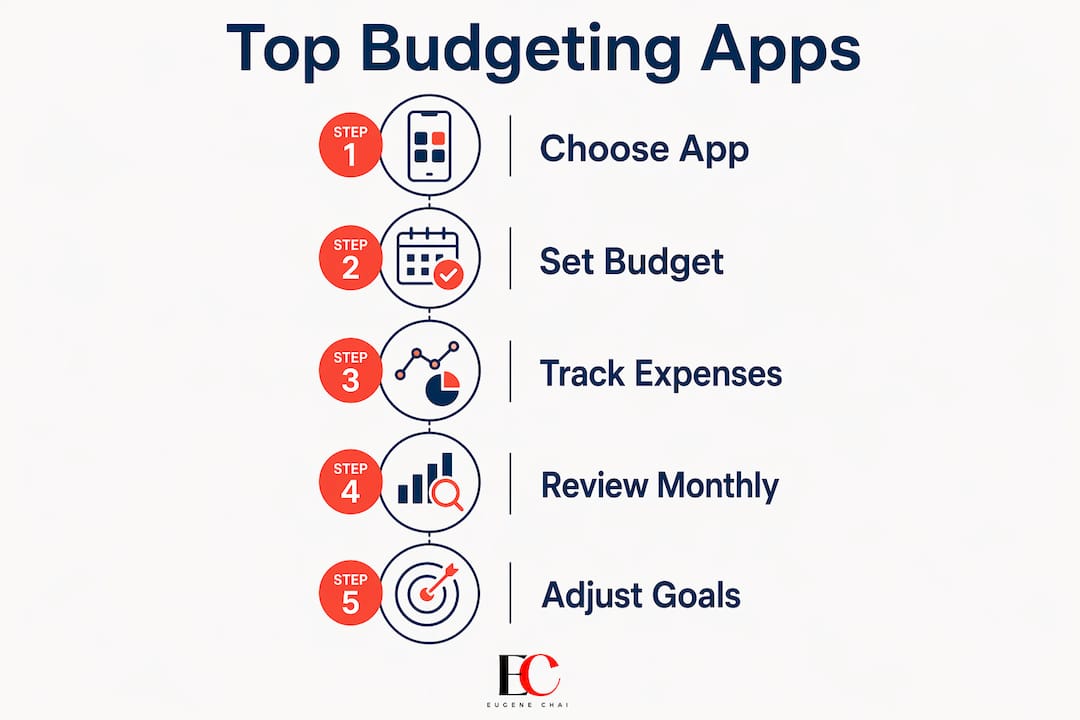
Pro Tip: Start with a free app and build the habit for 30 days before deciding whether to pay for premium features. Paying for an app you do not use consistently is wasted money.
How do you set up a daily expense tracking system?
A working system requires three things before you log your first transaction: a chosen app or spreadsheet, your last two months of bank statements, and a firm commitment to daily entries. Skipping the setup phase is why most people abandon tracking within two weeks.
Follow these steps to build a system that sticks:
- Define your categories. Start with six to eight broad categories: food and drinks, transport, housing, utilities, entertainment, personal care, subscriptions, and miscellaneous. Broad categories are easier to maintain than granular ones.
- Enter all recurring expenses first. Applying recurring payment templates at the start of each month anchors your fixed costs and gives you a realistic view of disposable income before you spend a cent. In Singapore, this means logging your HDB loan or rent, MRT top-up, phone bill, and insurance premiums upfront.
- Set category budgets. Use your bank statements to calculate your average monthly spend per category, then set a budget that is realistic, not aspirational. Cutting your food budget by 50% in month one is a plan that fails.
- Record expenses at the point of transaction. Logging immediately improves accuracy and makes your records useful for IRAS tax preparation. Note the merchant name, not just the amount.
- Review at the end of each day. A two-minute daily check catches missed entries before they pile up into a weekend of guesswork.
Pro Tip: Anchor your month’s budget with every recurring expense before you touch variable spending. This single step shows you exactly how much you have left to work with, and it takes less than five minutes.
How do you categorize and review expenses for better budget control?
Categorization turns a list of numbers into a story about your spending habits. Without it, you have data. With it, you have direction. The goal is to see, at a glance, which areas of your life cost the most and whether those costs align with your priorities.
Apps like YNAB and Wallet by BudgetBakers handle automatic categorization, but you should review and correct these assignments weekly. A $12 charge at a hawker centre might be tagged as “restaurants” when you want it under “food and drinks.” Small mismatches compound over a month and distort your budget picture.
Apps that translate data into plain-language insights with clear “safe to spend” figures outperform those that rely on complex charts and percentages. Knowing you have $180 left for food this month is more useful than a pie chart showing food at 34% of spending. UseKYN is one example of an app built around this principle.
Here is a sample monthly expense breakdown for a working professional in Singapore:
| Category | Monthly Budget (SGD) | Actual Spend (SGD) | Variance (SGD) |
|---|---|---|---|
| Food and drinks | $400 | $460 | -$60 |
| Transport (MRT/bus) | $120 | $105 | +$15 |
| Housing (HDB loan) | $900 | $900 | $0 |
| Entertainment | $150 | $210 | -$60 |
| Subscriptions | $50 | $65 | -$15 |
| Personal care | $80 | $70 | +$10 |
Monthly reviews by category expose overspending patterns that require either a budget adjustment or a deliberate spending cut. In the table above, food and entertainment are both over budget. That signals a lifestyle choice worth examining, not just a math problem.
Pro Tip: Use apps that give you a single “safe to spend” number for the day or week. This plain-language figure removes the mental load of calculating budget headroom yourself and keeps you on track without obsessing over spreadsheets.
What are the common mistakes when tracking expenses and how do you fix them?
The biggest mistake is not forgetting to log expenses. It is overcomplicating the system until logging feels like a chore. Over-complicating the tracking process is the most common barrier to consistency, and simplicity drives long-term success far more than precision does.
Here are the key do’s and don’ts to keep your tracking on track:
Do:
- Log expenses immediately, even as a rough amount. A quick $4.50 entry for your kopi beats a perfect entry you never make.
- Keep categories broad. Six to eight categories cover 95% of daily life without creating decision fatigue.
- Set a weekly 10-minute review block in your calendar. Treat it like a standing meeting.
- Use app reminders or phone widgets to prompt logging after meals or commutes.
- Record recurring costs like Spotify, Netflix, and MediShield Life premiums on day one of the month.
Don’t:
- Wait until the weekend to log a full week of transactions from memory.
- Create sub-categories before you have three months of consistent data.
- Abandon the system after one bad week. A gap in data is recoverable; quitting is not.
- Rely entirely on bank sync without reviewing each imported transaction.
A rough entry logged immediately is far more valuable than a perfect entry logged two days later. This principle matters because the psychological barrier to logging drops when you lower the standard from “perfect” to “good enough.” Consistency, not precision, builds the habit.
Tools like Hutsy take this further with AI-powered morning briefings of roughly 90 seconds that highlight upcoming bills and low-balance risks. This kind of proactive alert system removes the need to remember every financial obligation manually.
Key takeaways
Tracking daily expenses effectively requires consistency over perfection, a simple categorization system, and regular monthly reviews to turn spending data into smarter financial decisions.
| Point | Details |
|---|---|
| Choose the right tool | YNAB suits disciplined budgeting; Wallet by BudgetBakers offers the best free tier for beginners. |
| Anchor recurring costs first | Log fixed expenses like HDB loan and MRT passes at the start of each month before tracking variable spend. |
| Log immediately, not later | A rough entry made at the point of purchase builds better habits than a perfect entry made from memory. |
| Review monthly by category | Comparing actual spend to budget by category reveals overspending patterns and guides adjustments. |
| Simplicity drives consistency | Broad categories and plain-language insights outperform complex systems that feel like work. |
Why consistency beats perfection in expense tracking
I started tracking my expenses with a spreadsheet in my mid-20s, and I made every mistake in the book. I built 20 categories, color-coded every row, and spent more time maintaining the system than actually learning from it. Within six weeks, I had abandoned it completely.
The shift happened when I stripped everything back to six categories and committed to logging within five minutes of any transaction. No more perfect entries. No more waiting until I had “time to do it properly.” That single change made the habit stick, and within three months, I had a clear picture of my spending for the first time.
For young Singaporeans, the local context matters. Your fixed costs, HDB loan or rent, MRT monthly concession, and phone plan, are predictable. Your variable costs, hawker centre meals, weekend outings, and the occasional Grab ride, are where the surprises hide. Tracking those variable costs consistently is where you find the money you did not know you were spending.
My honest advice: do not wait for the perfect app or the perfect month to start. Open Wallet by BudgetBakers or even the Notes app on your phone and log today’s expenses. You can learn why tracking matters and refine your system as you go. The data you collect in the first 30 days will tell you more about your financial habits than any article ever could.
— Eugene
Take your budgeting further with Eugenechaitf
Daily expense tracking gives you the data. A structured budget tells you what to do with it.
Eugenechaitf has helped thousands of Singaporeans connect their spending habits to real financial goals, from building a three-month emergency fund to clearing credit card debt. The budgeting tips and strategies on the site go beyond basic advice, covering practical frameworks for managing both fixed and variable expenses in the Singapore context. If you are ready to move from tracking to planning, explore the personal finance resources at Eugenechaitf and build a money system that works for your life, not just your spreadsheet.
FAQ
What does it mean to track daily expenses effectively?
Tracking daily expenses effectively means recording every transaction promptly, categorizing it correctly, and reviewing your spending regularly to make informed budget decisions. The goal is consistent data, not perfect data.
Which is the best free app for daily expense tracking in singapore?
Wallet by BudgetBakers offers the most feature-rich free tier among expense tracking apps in 2026, including multiple account support and AI categorization. Monefy is a strong alternative for users who prioritize speed of entry.
How often should i review my tracked expenses?
A quick daily check of two minutes catches missed entries, while a deeper monthly review by category reveals overspending patterns. Both habits together give you full control over your budget.
Is manual tracking better than automatic bank sync?
Manual tracking builds stronger spending awareness because you engage with each transaction consciously. Automated sync is convenient but risks complacency, where you stop noticing individual spending decisions.
How do i stop forgetting to log expenses?
Log immediately at the point of purchase, even as a rough amount. Set app reminders after regular spending moments like lunch or your MRT commute, and keep your category list short enough that logging takes under 30 seconds.
Disclaimer: Informational only. Consult an MAS-licensed advisor before investing.






Leave a Reply